Building performance · Ottawa
Comfort starts behind the finishes.
A beautiful home should also be comfortable to live in. Ottawa’s cold winters and warm summers make the building envelope and mechanical systems important parts of the conversation. We bring these decisions into construction planning, alongside architecture and finishes.
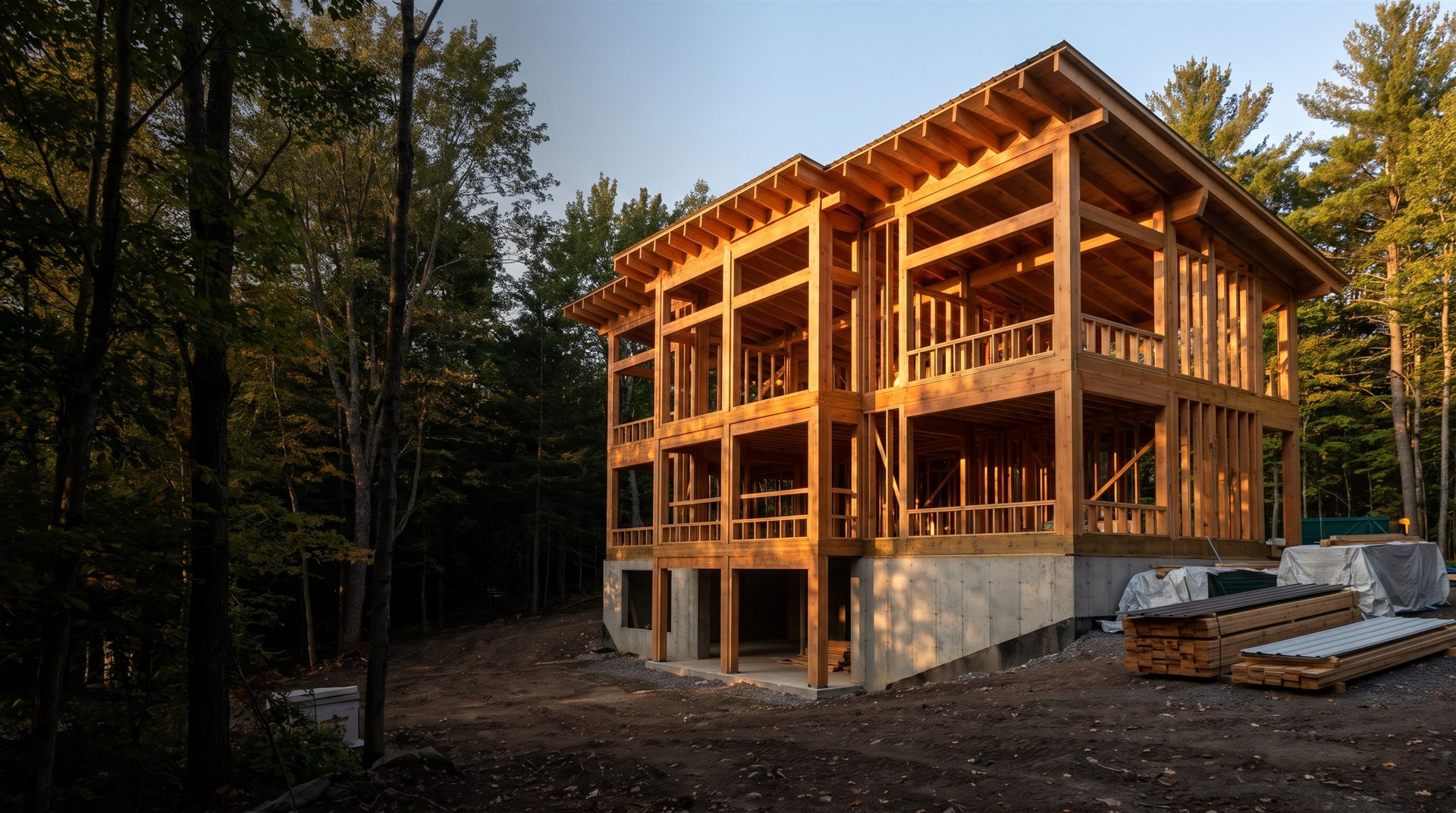
The building envelope
Consider the home as a connected system.
Insulation, air sealing and windows work together. Their performance depends on the design and the continuity of the details where materials, openings and assemblies meet. Early coordination helps identify how those details will be carried through on site.
Insulation & thermal bridges
Discuss the proposed assemblies and the locations where structural elements or connections may interrupt the insulation layer.
Air sealing
Pay attention to transitions, penetrations and the continuity of the air barrier. Details need to be understood by the trades whose work touches them.
Windows & openings
Consider window performance with orientation, glazing area, installation details and the goals for daylight and comfort.
Mechanical coordination
Plan heating, cooling and ventilation together.
Equipment decisions should be coordinated with the home’s design and envelope. We discuss the involvement of the appropriate mechanical professionals and, where useful to the project, an energy advisor. Space for equipment, ducts and service routes needs to be considered before finishes are resolved.
When performance testing or a particular certification is part of your objectives, the requirements, responsible professionals and verification steps need to be defined in the project scope. We do not assume that a product selection alone establishes a home’s performance.
Make informed choices
Put the right improvements in the right order.
The best choices depend on your site, design, budget and whether you are building new or improving an existing home. We help bring these priorities into the construction discussion early, particularly where details would be difficult to change later.
Can you help with an existing home?
Energy-related improvements can be considered within a renovation or addition. The useful starting point is understanding the existing assemblies and the extent of the planned work.
Which upgrades should come first?
There is no universal order. The design, existing conditions, budget and professional assessments help determine where improvements will be most appropriate.
How do we set performance goals?
Tell us whether comfort, lower energy use or a specific performance target is your priority. We can discuss the planning and professional input needed to define the scope.
Let’s talk
A good home starts with a good conversation.
Tell us where you are in the process, what you hope to create and the questions you want answered. We will discuss your priorities and the next step that makes sense for your project.